The Professional Services Firm’s Guide to Building a Proposal Team That Wins
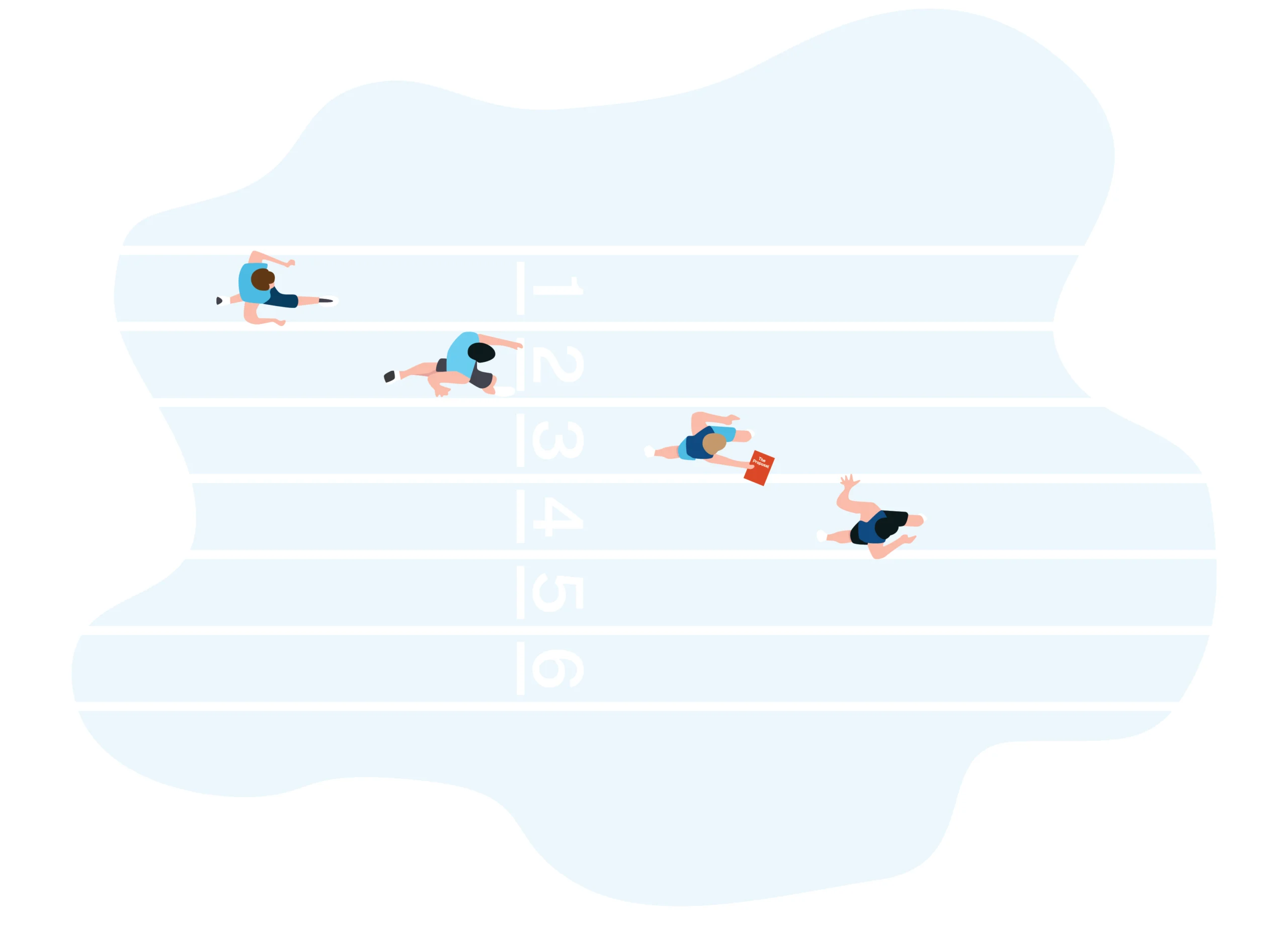
The RFP lands on a Tuesday. By Thursday, three people who already have full-time jobs are quietly rewriting each other’s sections, a principal is “reviewing” at 11 PM, and someone has reformatted the cover page for the fourth time. Sound familiar? That’s not a proposal team. That’s a fire drill with a deadline attached.
In more than fifteen years of reviewing proposals, the most common thing I see at professional services firms isn’t a talent problem. It’s a structural problem. Most firms don’t have a proposal team. They have a list of capable people who get interrupted whenever a bid comes up. The work gets done, somehow. But “somehow” doesn’t win consistently.
KEY TAKEAWAYS
- A winning proposal team is a capability, not an organizational chart; most firms try to solve a capability problem by assigning more bodies.
- The difference between a group and a team is structure: defined roles, a shared method, and a process that repeats.
- Define roles before you assign people; clarity about who owns what ends the 11 PM scramble.
- Proposal team training for professional services firms builds judgment, not just task completion; judgment is what holds up under pressure.
- Teams that win consistently treat every pursuit as practice that compounds, not a one-off emergency.
A Winning Proposal Team Is a Capability, Not a Headcount
Here’s the distinction that changes everything: a group is who you assign to a bid. A team is how you’re built to compete.
I’ve watched firms with genuinely stronger technical talent lose, again and again, to weaker competitors. Not because the better firm couldn’t do the work. They obviously could. They lost because they treated each proposal as a one-time scramble, while the competitor had a system they ran every time.
Think of it like a pickup basketball game. Five talented players who have never run a play together will lose to five decent players who have. Talent loses to coordination. Proposals work the same way. The firm that has rehearsed the play, knowing who drafts, who reviews, and who decides, beats the firm relying on individual heroics.
That’s why proposal team training matters more than another senior hire. You can add talent to a group and still have a group. A team is something you build on purpose.
Define the Roles Before You Assign the People
Most proposal chaos traces back to one root cause: nobody is sure who owns what until the deadline forces the question.
This is where our PRIME System starts: People, Roles, Information, Milestones, Execution. The “R” comes early on purpose. Before you name a single person, name the roles the pursuit actually requires.
At a minimum, a functioning proposal team needs four. A pursuit lead owns the strategy and the win theme, the person accountable for why we should win, not just what we’ll write. Contributors and subject-matter experts supply the substance. A coordinator owns the schedule, compliance, and the moving parts. And a reviewer reads the draft as the client will, not as the author hopes.
Notice that none of those roles is “the person who happens to be free.” When you assign by availability instead of by role, you get a proposal written by whoever had the lightest week. That’s not a strategy. That’s a coincidence.
Train Judgment, Not Just Tasks
This is where proposal team training for professional services firms actually earns its keep, and it’s the part most firms skip.
It’s relatively easy to teach the mechanics: how to structure a response, build a compliance matrix, and write a clean executive summary. Those are tasks, and tasks are trainable in an afternoon. Judgment is different. Judgment is knowing which RFPs are worth chasing and which are wired for the incumbent. It’s knowing which of your three possible win themes actually matters to this client. It’s knowing when a draft is “good enough to send” versus “good enough to win.”
Here’s what that looks like in practice. Two firms see the same RFP. The untrained group reads it as a checklist and answers every question competently. The trained team reads it to understand the decision behind it: what is this client actually worried about, who are they comparing us to, and what would make them feel safe choosing us? Same RFP, same word count, completely different proposal. One is compliant. The other is persuasive. That gap is judgment, and it can be taught.
AI has sharpened this distinction, not softened it. AI can now draft a competent proposal section in seconds. What it cannot do is decide whether you should bid, what you should emphasize, or why this client should trust you over the firm down the street. The mechanical layer is being commoditized. The judgment layer is becoming the entire game.
This is the gap a structured proposal training curriculum is built to close, systematically, and in a way your team can apply to the very next pursuit.
A trained team makes those calls quickly and consistently. An untrained group relitigates them on every bid, usually at 11 PM, and the principal usually overrules everyone. Training moves judgment out of one person’s head and into the team’s shared instinct.
Give Your Proposal Team a Memory
A team that starts every proposal from a blank page isn’t a team. It’s a group of people repeatedly reinventing the same wheel under a deadline.
The best proposal teams I’ve worked with have a memory. They know what worked last time and why. They have language for their differentiators that doesn’t need to be re-argued on every pursuit. They have a sense of their own win rate and what moves it. That institutional memory is what lets a team get faster and sharper over time, rather than just exhausted.
This is the quiet compounding advantage. The firm that captures what it learns gets a little better with every bid. The firm that doesn’t start from zero forever, and wonders why proposals never get any easier.
The Leader’s Real Job
If you run business development, here’s the uncomfortable reframe: your job isn’t to be the proposal team. It’s to build one.
The most common failure mode I see in firm leaders is becoming the single point of failure: the one person who knows the strategy, holds the standards, and rescues every bid at the last minute. It feels indispensable. It’s actually a ceiling. A team built around one person’s heroics can only win as often as that person has nights and weekends to spare.
The leaders who break through stop being the system and start building it. They invest in roles, methods, and training so the capability lives in the team, not in their inbox. That’s a harder thing to build. It’s also the only version that scales.
You’re not building a proposal team to win the next bid. You’re building a capability that makes the next fifty easier to win. The firms that understand that stop treating proposals as emergencies and start treating them as a discipline they’re getting measurably better at. That’s the advantage that compounds while everyone else is still running fire drills.
About the Author