Introducing Our Online Proposal Training Program
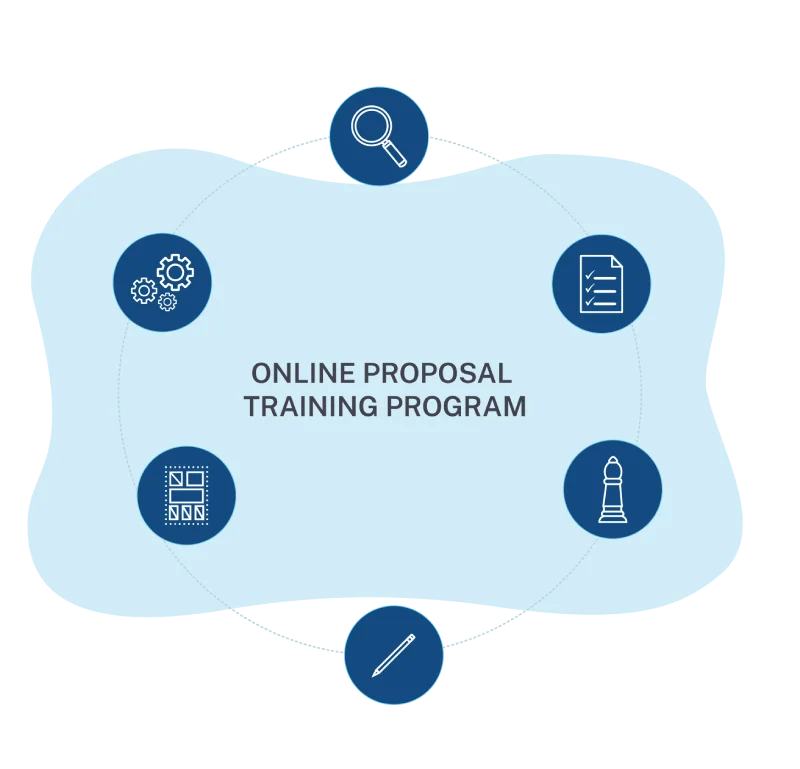
Most proposal training does not survive contact with the next deadline. You send three people to a one-day workshop, they come back energized, and within a month the old habits creep back. I have watched this cycle play out at firm after firm, and it taught me something simple. Capability is built through repetition, not revelation. That conviction is why our online proposal training program exists, and why we built it the way we did.
KEY TAKEAWAYS
- One-day workshops rarely change how a team works, because skills fade without practice and reinforcement.
- Good online proposal training is self-paced, applied to real work, and structured around the roles your people actually play.
- Our program covers six sections that follow the full bid lifecycle, from finding opportunities to managing the whole operation.
- The curriculum is built on the same frameworks we use in client engagements, so your team learns a system, not a grab bag of tips.
- The goal is not to make your people sound like consultants. It is to make them better at winning the work in front of them.
Why one-day workshops rarely change how a team works
Here is the thing about a single training day. It is an event, and events do not build skills. Skills come from doing something badly, getting feedback, and doing it again slightly better. A workshop compresses a year of that into eight hours, then sends everyone back to a desk full of the same pressures that created the bad habits in the first place.
In more than fifteen years of working with proposal teams, the pattern I keep seeing is this. The knowledge transfers fine. The behaviour does not. People leave the room understanding what a stronger executive summary looks like, then write the same weak one on Thursday because the deadline is real and the new habit is not yet automatic.
The fix is not a better workshop. It is a different shape of learning. You need content people can return to when the lesson actually applies, not three weeks earlier in a conference room.
The cost of getting this wrong is quiet but constant. It shows up as the same avoidable errors in every submission, the rework that eats a weekend, the strong technical firm that keeps placing second. None of it looks like a training problem on the surface. It looks like bad luck, a tough market, or a tough evaluator. Often it is none of those. It is a team that was never given the chance to build the skill properly in the first place.
What good online proposal training actually looks like
The phrase online proposal training conjures a grim picture for a lot of people: a recorded webinar, a quiz, a certificate nobody reads. That is not learning. That is compliance theatre.
Real online learning for proposal work has three qualities. It is self-paced, so a coordinator can take a course the morning they need it. It is applied, so every lesson connects to a document your team is actually producing. And it is role-aware, because the person hunting for opportunities, the person writing the technical response, and the person managing the schedule do not need the same things.
You can build a version of this yourself, and some firms do. Map your recurring mistakes, write down what good looks like for each one, and create short references your team reaches for under pressure. The discipline matters more than the platform. We packaged ours into a structured online proposal training curriculum so teams do not have to start from a blank page, but the principle holds either way: teach the skill near the moment it gets used.
Here is what applied looks like in practice. A coordinator facing a compliance matrix for the first time should not be sent to a general lesson on proposals. They should reach a short, specific course on building that matrix, finish it in twenty minutes, and apply it to the document open on their screen. The learning and the work happen in the same hour. That is the difference between knowing about a skill and actually having it.
Inside the online proposal training program: six sections, one bid lifecycle
We did not organize the curriculum around topics that sound impressive. We organized it around the way real bids move, from the day an opportunity appears to the day you debrief the result.
The program runs across six sections. The first covers finding and evaluating RFx opportunities, so your team stops chasing work it cannot win. The second covers creating and submitting compliant proposals, because the fastest way to lose is to get disqualified on a technicality. The third moves into developing a winning proposal strategy, where most firms are weakest. The fourth is authoring persuasive proposal copy, the discipline that separates a competent response from a compelling one.
The fifth section covers designing professional, on-brand proposals, because evaluators read with their eyes before they read with their judgment. The sixth pulls everything together into building an optimized proposal management system, so the gains do not depend on one heroic individual staying late.
Each section breaks into short, focused courses you can finish between meetings. They are built on the same frameworks we use in our own engagements, including the VTL approach to persuasion and the PRIME system for managing the process. We name the frameworks and teach you to use them. We do not hand over the full playbook in a video, because some of that judgment only forms through guided practice.
The sections are sequenced deliberately, but they do not have to be taken in order. A coordinator drowning in version control can jump straight to the management section. A writer who keeps getting marked down on persuasion can live in the copy section for a month. Over time, the pieces connect. People who started with one narrow problem end up understanding how a whole bid fits together, which is the point.
Who it is for, and who it is not
Let me be honest about fit, because the wrong people in a program waste their own time.
This is built for professional services teams that bid regularly and want to get measurably better at it. Proposals managers who are tired of reinventing every response. Business development leaders who keep losing winnable work. Marketing leads who own the document but never had formal training in how a bid is actually evaluated.
It is not for someone looking to outsource the thinking. We integrate artificial intelligence into the curriculum where it genuinely helps, and we are direct about what it changes. Artificial intelligence can draft a serviceable proposal in minutes. It cannot decide what to emphasize, read a selection committee, or know which of your past projects will land with this particular client.
Those judgments are exactly what the program builds, and they are exactly what will matter more, not less, as the writing itself gets cheaper.
If your team already wins everything it touches, you do not need us. If it does not, this is a faster route to the judgment that closes the gap.
The program is open for enrollment now. Send one person, send the whole team, or work through it yourself. The compounding starts the moment people begin applying it to live work.
Browse the Online Training curriculum →
About the Author